
Curb Your Consumerism
Pulling back the curtain on fads and trends that have you spending too much money on products you don’t need.
Eryn Harvey
–
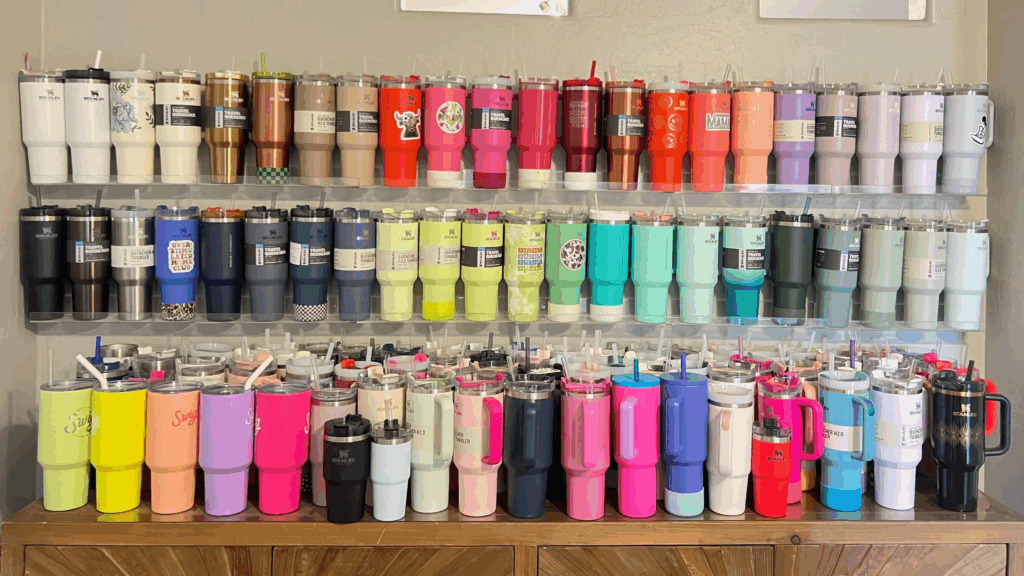
Picture this: a new reusable water bottle is starting to make the rounds online. Whether it’s TikTok, Snapchat, Instagram, or whatever new social media site is popping up, the outspoken influencers of the world are telling you that you need this water bottle. Since you want to be like these successful-looking people, you buy it in at least three different colors to match your outfits. Six months later, a new brand starts selling a different reusable water bottle and people start telling you that this one is even better, so you buy this new one in at least three different colors to match your different outfits again. Once the cycle repeats a few times, you realize you have far too many water bottles and no space to put them, and if you’re anything like me, you have one that you like and always use while the rest collect dust for months at a time.
This doesn’t have to be about water bottles. I’ll bet there is some line of products that you impulse-buy because you think you need them, just for it to collect dust and never get used. Many of these products start off as items you actually need in your day-to-day life. But too often, especially since the rise of the social media star has taken the world by storm, people spend money they don’t intend to on products they don’t need. This could be anything from new colors of makeup that are slightly different from what you already have, to the knick-knacks in the Target dollar section, to a new set of sneakers in a slightly different color palette. Inevitably, these products start collecting dust, you throw them away, and buy something new, restarting the cycle with much less money than you started with.
It would be a lie to say that I haven’t fallen into the same trap more times than I can count. I have many reusable water bottles that I never use, earrings that I bought from Etsy and never wear, games that looked so fun that I’ve never opened, and clothing that sits in my closet with the tag still on many items, months after I got each one. Despite these items that I have cluttering up both my room here at the University of Saint Joseph and my room at home, every time I log on social media I’m tempted to buy more things with money I don’t have, to fill up space I don’t have, simply because some stranger said it’s a good idea.
Fortunately, a new kind of content has been on the rise lately, and it piqued my interest in decluttering my life. Some creators have taken on the role of “De-Influencers” to share more about the inside secrets and strategies used by brands to make you buy more of their products. Oftentimes, these products are cheaply made and mass produced so that they’ll break, making you buy another product from the same brand to replace it. Furthermore, they use marketing strategies, such as sending influencers large varieties of their products, to advertise as many products as possible in a single setting. This both shows off what products are available for the consumer (you) to purchase and it normalizes the excessive spending and hyper-consumerism that allows them to perpetuate the cycle and line their pockets in the process.
So, what can you do? The best way to not fall victim to these schemes and to the hype is to shop with intention. The purchases you make are direct feedback to the company you purchased from, saying that you like their products over competitors’ products, and the differences they put into their products is worth it. Each time you spend your money on a product advertised over social media, it shows that you and others will buy products that are advertised that way. It also shows brands that fads started by the right influencers will pull in a large profit by pushing the consumer market to dress a certain way, have certain items, use certain makeup to achieve certain looks, and decorate their living space to match a certain aesthetic. Instead of following the trend and losing money every time a new trend comes around, build your own identity around colors and aesthetics that you like, from brands that you enjoy. Shopping second-hand or trading with your peers is also a great way to save money and still create your desired look. Also, never underestimate the power of a multifunctional item, especially one that looks great and still be useful in multiple settings.
You worked hard for your money, so make sure your money is working hard for you in ways that make you happy and confident.