
“No Plan” – Hozier Music Review
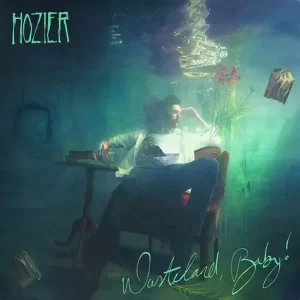
“No Plan” – Hozier; 2nd Studio Album – March 1, 2019
Wasteland, Baby!, Track 4
Ella Kulas
A beautifully written ballad about love and religion, Hozier’s “No Plan” is a poetic argument for atheism. Fueled by an exquisite combination of electric guitar, synthesizer, and drums, Hozier steps onto his soapbox and emphatically orates about the fleetingness of life, and how the beauty of that fleetingness should not be stifled by religion.
“For starts
What a waste to say the heart could feel apart
Or feel complete baby
Why would you make out of words a cage for your own bird
When it sings so sweet
The screaming, heaving fuckery of the world?
Why would you offer a name to the same old tired pain
When all things come from nothing and, honey, if nothing’s gained?”
This verse explores the limitations that come with trying to define ourselves and our existence. The first few lines warn against placing boundaries created by words on the vastness and complexity of human emotion. This sentiment continues into the next line, where Hozier employs the metaphor of a caged bird to illustrate how the bird’s song about the true nature of the world is limited by one-dimensional description. The final two lines of the verse end the argument by inviting the listener to consider why we place substantial importance on classification and definition. Here, Hozier asks, “If it is limiting to outline ourselves, and everything will end eventually, then what is the point in that limitation?”
This seems at first glance to be a rather nihilistic point of view; however, Hozier is not railing against definitions in any part of life. Rather, he is warning against defining our lives within something that limits us, alluding specifically to religion. Some religions posit that life is a test and impose strict rules on how to live, with a promise of eternal peace and pleasure when it is done. These rules, outlined in religious texts, are the words that cage the bird, so to speak. This view gives even more meaning to the last line of the verse, which can now be interpreted as, “There is no afterlife, so you gain nothing by defining your life by this strict set of rules; just live.
“My heart is thrilled by the still of your hand
That’s how I know now that you understand
There’s no plan, there’s no race to be run
The harder the rain, honey, the sweeter the sun
There’s no plan, there’s no kingdom to come
I’ll be your man if you’ve got love to get done
Sit in and watch the sunlight fade
Honey, enjoy its gettin’ late
There’s no plan, there’s no hand on the reign
As Mack explained, there will be darkness again”
The chorus clearly references several religious concepts and phrases that further evidence the song’s connections to religion. Hozier outright denies the existence of the “plan,” often referenced as an excuse for the existence of anything from the struggles of day-to-day life to abhorrent events like war and genocide in the presence of an all-powerful, purely good “god”. The “race” furthers that idea, denying that life is a task to be completed to win the medal of entrance into heaven. The next line, “The harder the rain, the sweeter the sun,” expands upon this sentiment, albeit sarcastically, mocking the idea that hardship has a causal relationship with happiness. Immediately following, Hozier denounces the existence of “kingdom come” or a “hand on the reign,” which are more explicitly referencing common Judeo-Christian sentiments. These lines accentuate the inevitability of darkness at the end, rather than eternal paradise. The “Mack” referenced in the chorus is Dr. Katherine J. Mack, an astrophysicist who has discussed the inevitable heat death of the universe, wherein nothing will exist, even light. This concept is also highlighted in the line “Sit and watch the sunlight fade,” referencing the same darkness.
“Let it hurl, let the awful song be heard
Blue bird, I know your beat, baby
But your secret is safe with me, ‘cause if secrets were like seeds
Keep my body from the fire, hire a gardener for my grave
Your secret is safe with me and if secrets were like seeds
When I’m lying under marble, marvel at the flowers you’ll have made”
The first lines call back to the first verse and the caged bird’s song, telling people to discard the cage and live. The following lines illustrate Hozier’s commitment to the person he is speaking to, a metaphor for all of humanity, in that he will let them live without the judgment commonly found in religious spaces when people leave the religion, or behave in ways contrary to that religion’s beliefs. He then asks that the person not cremate him, but bury him so they can see how he keeps their secrets and, quite literally, takes them to the grave. This not only represents the importance of community outside of religion but also the understanding he has for those who cannot so easily fling off the confines of those rules.
“How big the hourglass, how deep the sand
I shouldn’t hope to know, but here I stand”
In the end of the song, Hozier switches the pre-chorus, adding these lines, which give the listener an explicit alternative to religion. He says that we cannot ever know the answers to everything, or the meaning of life, and we should not force ourselves to reason everything out. We may wonder, but the point is to live how we want within the time we have.
There is much to be gained from Hozier’s interpretation of how we should live our lives. He implores us to consider that the time we have is short and destined to come to an end. Instead of dreading that, we should make use of the time we have and spend it living how we want to with the people who make our life feel most complete.