Political Panels: Comics as Disruptive Art
By: V. Stone Priesnitz
When I was younger, I occasionally read comics—most of which I found at my local library. These included sporadic trade paperbacks pulled from the middle of long runs (an ongoing series of comic books), massive compendiums of newspaper strips too large for my little hands to hold, and graphic novels that felt too abstract for me to fully comprehend. Although I revisited comics over the years, I never wanted to follow a full run because it felt too daunting as a casual fan.
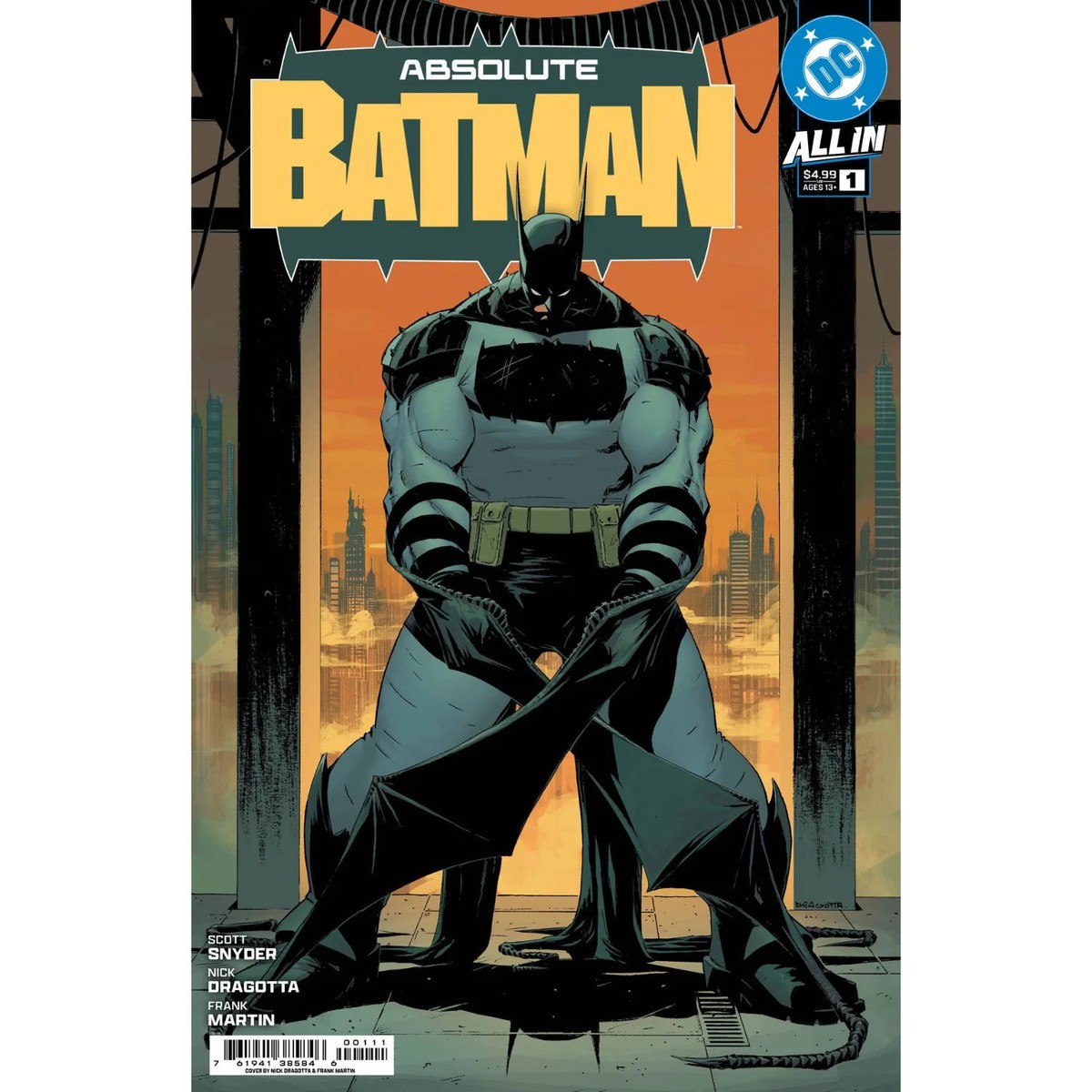
That changed when friends from school introduced me to the Transformers (2023-) comic run. The series was everything I did not expect from a long-running corporate franchise: gritty, emotional, and unapologetically reflective of the artists’ ideals. I found similar qualities in another series I recently read, Absolute Batman (2024-). Like Transformers, it explores political themes that align closely with its characters.
While I am not well versed in the broader Transformers franchise, Batman has been a character that I have connected with for as long as I can remember. Both series have sparked controversy—not only because of their narratives, but also because of the public stances taken by the creative teams. To illustrate this, consider these sketches drawn and posted on social media by Daniel Warren Johnson, a leading writer and artist for both series:
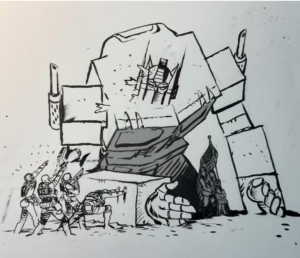
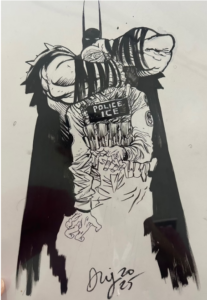
In my view, these sketches are fitting representations of the characters Johnson set out to portray. To explain why, it is necessary to look at what makes these two comic runs particularly compelling.
As someone new to Transformers, I chose Transformers (2023-) because it presented itself as a fresh starting point. Both new and longtime friends recommended it. What I found was a powerful narrative about family and home—one that does not shy away from exploring both their strengths and their flaws.
Like many stories about alien visitors, the series is filled with allegories for immigration and found family. Johnson builds on Optimus Prime’s familiar “gentle but strong” leadership, positioning him as a paternal protector for those around him. The story begins with a devastating loss, as Optimus fails to save someone he swore to protect. This moment mirrors the human characters in the series, many of whom experience similar losses throughout the plot.
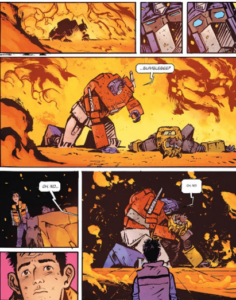
Negative portrayals of family are most visible among the antagonists, though they are not limited to them. One character who stood out to me was Starscream. Initially presented as a cruel and self-serving villain, he is later revealed to be a victim of severe emotional and physical abuse. The “family” he belongs to operates through power and domination, leaving characters like Starscream to believe this is their only path to survival and belonging.
The Decepticons—the faction he uneasily aligns with—reflect “scorched earth” tactics seen in modern warfare. Their destruction of cities and killing of civilians is unsettling, particularly because of how closely it mirrors real-world violence beneath its science fiction surface. Ultimately, many characters in the story are driven by two central forces: belonging and fear.
Themes of home, family, and fear are also central to Absolute Batman. What initially drew me to the series was twofold: its horror-inspired artwork and the contrast between that intensity and its emotional character interactions, which I had seen in clips on social media.
The story follows Batman as he experiences the gradual loss of his family—both those connected to him by blood and by choice. Unlike traditional portrayals, this version of Bruce Wayne has no wealth, no butler, and no corporate safety net. He is the son of a widowed mother working for the mayor and holds a blue-collar construction job to support his family.
Despite pushing people away after his father’s death, Bruce remains surrounded by friends who continue to support him through the instability of early adulthood. Absolute Batman places readers in the perspective of someone trying to defend his home while struggling to survive and hold his family together.
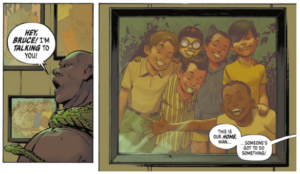
In this story, Batman fails—a lot. What makes him heroic is his ability to learn and adapt in order to become better. He relies on his friends and family when he is overwhelmed, and he holds onto his ideals even when everything around him begins to collapse. Even when others pull away, he persists, showing up and reminding them that he cares.
This is not a portrayal of a stoic, self-sufficient hero acting as a one-man army. Instead, Batman’s greatest conflict is internal: his impulse to give in to violence. Characters such as Alfred and Bane push him toward becoming a more ruthless figure, while his family serves as his moral grounding, encouraging him to care for himself as much as he cares for others.
Because of this, the series presents a version of Batman that challenges the toxic masculinity often associated with comic book heroes. He experiences fear, expresses emotion, and, at times, retreats. Despite this, he continues to fight with just as much heroic bellicose as before.
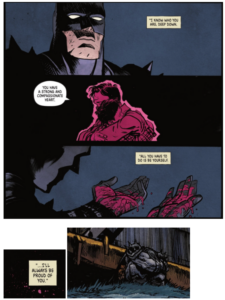
One notable issue of Absolute Batman is Annual Special #1, written by Daniel Warren Johnson. This issue presents a flashback to Batman’s past, where he confronts a group of white supremacists after witnessing racially motivated violence.
This storyline aligns with the historical roots of comic book heroes, many of whom rose to prominence during World War II while opposing fascism both abroad and at home. The issue functions as both an homage to that legacy and a piece of disruptive art addressing modern concerns surrounding authoritarianism and white supremacist movements.
Throughout the issue, Batman responds with intense violence. As the story takes place earlier in his development, he is still struggling with his identity and emotions following his father’s death. In this moment, Batman is not only responding to violence—he is also grappling with his own.
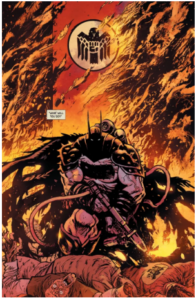
While the issue suggests that peace is not always possible in the face of violent opposition, it does not ignore the cost of that violence. The story concludes with Batman curled into himself, questioning whether his action would have made his father proud.
This raises a central question: Is it justified to respond to violence with violence if refusing to act could result in greater harm? That uncertainty—whether it was “worth it”—is at the heart of what artists like Johnson ask readers to consider.
At what point does the responsibility to protect one’s home begin? And by what right can someone deny another person that same security? Heroism is ultimately not defined by constant victory, but by the refusal to lose hope in the face of adversity.