
Touhou 6 Gets a New Classic
By: Viktor Orzolek
Twenty-four years ago, Touhou Koumakyo ~ the Embodiment of Scarlet Devil (東方紅魔郷 ~ the Embodiment of Scarlet Devil), developed and created by ZUN, the pseudonym of Jun’ya Ota, was released. The game marked the sixth installment in the Touhou franchise and the beginning of the Windows era for the series. After Touhou 6, more Touhou games for Windows were released, bringing more iconic characters, music and art. Side projects, such as fighting games and manga that further explored the story of Touhou, emerged as well. Over time, Touhou developed a fanbase outside of Japan. To this day, Touhou 6’s characters remain fan favorites, inspiring fan art, high-quality covers and remixes of the characters’ themes, and absurd memes. Now, 24 years later, the game that started it all has received an HD remake.
Touhou Koumakyo ~ the Embodiment of Scarlet Devil: New Classic was released Sept. 9, 2026, and is available on Steam, PlayStation 5, Nintendo Switch and Nintendo Switch 2 for $17.99. Purchasing New Classic also allows players to receive the original Touhou 6, so players can experience both versions of the game. New Classic recreates the original experience while reworking elements ranging from the art style and music to new features, all while maintaining the spirit of the original.
On top of that, New Classic is the first Touhou game to feature support for 12 different languages, whereas prior Touhou games generally lacked official translations and often relied on fan translations. I love how accessible New Classic is, especially for newer players. Players no longer need to worry about language barriers or navigating some of the original game’s outdated design.
What’s new?
Gameplay-wise, New Classic remains largely faithful to the original, with some quality-of-life improvements and adjustments. Enemy placements and bullet patterns remain mostly the same, with changes such as updated hitboxes and standardized difficulty regardless of skill. In other words, the game does not become harder simply because the player is doing well. Various speed adjustments also improve the gameplay experience.
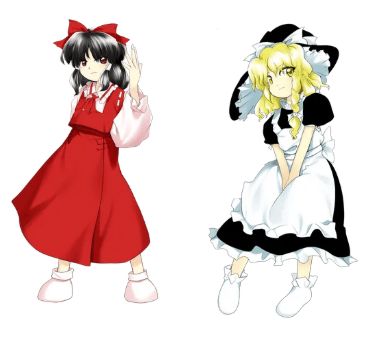
Players can choose between Reimu Hakurei and Marisa Kirisame. Reimu provides greater range, while Marisa provides speed and firepower. The story remains largely unchanged from the original, and the English translation is very faithful to previous English fan translations. The story still maintains its absurd dialogue between characters, and its humor is on another level.
The difficulty options are also the same: Easy, Normal, Hard and Lunatic. Touhou games vary in difficulty, but beginners may find them challenging as they adapt to dodging danmaku, which literally translates to “bullet barrage.” Touhou 6, in my opinion, falls somewhere in the middle in terms of gameplay difficulty, becoming significantly harder from Stage 4 onward. I haven’t consistently passed Stage 4 on Normal mode yet at the time of writing!
The game tackles difficulty in a way that encourages players to improve. Players can practice specific stages and even practice dodging certain spell cards from bosses rather than going through the entire game again. To get a good ending, players must beat the game on at least Normal difficulty without using a continue, meaning they cannot run out of lives. Furthermore, players can unlock the Extra Stage by achieving a good ending with either playable character.
Speaking of characters and art in general, the art style preserves the original designs of the characters’ portraits while giving them substantial glow-ups. It no longer hurts to look at the original designs, which looked like they were drawn by a beginner. To be fair, they were. The new designs feel more polished, and the characters’ sprites are now fully animated, giving the game a more lively feel. It’s nice to see that fans’ favorite characters received glow-ups while maintaining their original designs.
The soundtrack has also been reworked, and it sounds excellent. The original soundtrack is iconic and full of fan favorites, with many fan covers and remixes. What I find unique about the soundtrack in New Classic is that it deviates from ZUN’s usual style. I love how the OST includes more pronounced instrumentation while maintaining the retro video game aspects. It really captures the narrative of the stages and characters.
Overall, I’m having fun playing this game. Even though I haven’t passed Stage 4 on Normal mode, I still enjoy trying to figure out how to dodge certain patterns and learning how to dodge spell cards. I still want to keep going, and if replay value is a telltale sign of whether a video game is good, then New Classic shows exactly why Touhou 6 has remained beloved for 24 years.
The two playable characters, Reimu Hakurei (left) and Marisa Kirisame (right).
Comparison between Sakuya’s design in the original game (left) and New Classic (right).
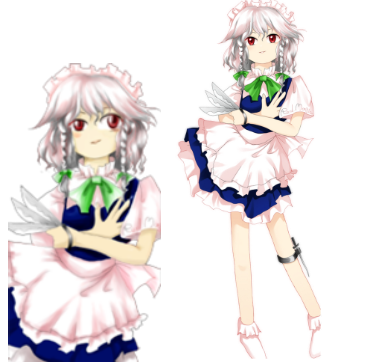
Image: Touhou Wiki
Comparison between Patchouli’s design in the original game (left) and New Classic (right).
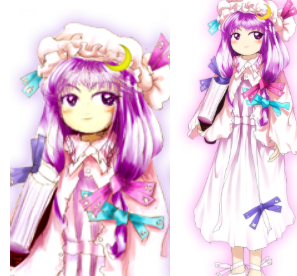
Images: Touhou Wiki