
Hockey 101 with Daniel Hodowanac & Jodi Ostroski
By: Gabrielle Bernabe
As Halloween approaches, Bluejays have another reason to celebrate: the home openers for USJ’s newest teams, men’s and women’s ice hockey! To prepare fans for the upcoming season, I sat down with Daniel Hodowanac and Jodi Ostroski, hockey players here at USJ, to discuss their experiences with the sport, what motivates them to play and what new fans should know before hitting the stands.
Hodowanac and Ostroski grew up in Roseau, Minnesota, and Watchung, New Jersey, respectively. Both have become familiar with the Connecticut chill, but their paths to college hockey have also taken them beyond their hometowns. College hockey often features players who are older than the typical college freshman, partly because many athletes spend time playing junior hockey before entering college. Junior hockey provides an opportunity for players ages 16 to 20 to continue developing their skills and gaining experience before moving on to the collegiate level.
When asked about his experience playing juniors, Hodowanac described it as “fantastic.” He also reflected on how the experience helped him develop character, maturity and independence from a young age. He considered himself fortunate that his former high school, Hills Regional High School, offered an online program that allowed him to continue his education while playing hockey around the country.
What Keeps Them Playing?
For Ostroski, hockey is closely connected to her father and the community she grew up in back home in Minnesota. She considers her father her “biggest supporter and cheerleader,” and his encouragement has continued to motivate her throughout her career.
For Hodowanac, much of his motivation comes from the lessons the sport has taught him.
“The traits and values that you learn in hockey and what I’ve learned from juniors and then from college as well … that’s made me the person I am today,” Hodowanac said.
His appreciation for accountability and personal growth continues to draw him back to the sport he has known and loved throughout his life.
Hockey Beyond the Rink
For Ostroski, one of the best parts of hockey is the people. Our conversation turned to the larger community of Simsbury and the impact USJ’s newest teams could have on the area. Ostroski discussed the hockey club that also plays at [name of venue] and the importance of giving younger players someone to look up to.
Reflecting on the young players in the Simsbury Northeaster hockey club, Ostroski said, “it is easier to become what you can see.”
The statement captures an important part of what these new teams bring to the community. By giving young athletes local players to watch and learn from, the Bluejays can help younger generations envision themselves pursuing the sport, too.
The teams’ community involvement extends beyond Simsbury. The Gengras Center has also felt the impact of USJ’s newest athletes. Over the past few weeks, members of the men’s and women’s ice hockey teams have been practicing with Gengras Center students to help them prepare for their own hockey tournament in November.
The tournament will take place Nov. 7 from 10 a.m. to noon. Those interested in supporting the students are encouraged to attend and cheer them on as they showcase their talents.
Looking Ahead to the Season
As both Hodowanac and Ostroski wind down their hockey careers, they are looking forward to playing alongside their teammates and seeing how much they can improve throughout the season.
Throughout both interviews, their excitement about taking the ice together was clear. Their enthusiasm reflects the close-knit relationships that have developed among the teams and the importance of that camaraderie as they begin this new chapter at USJ.
Game-Day Essentials
For Ostroski, game-day essentials include water, snacks and, most importantly, her “Hockey Hype” playlist. She explained that the music helps motivate her and reminds her that “when you think you’re tired, you’re not.”
Hodowanac takes a different approach to preparing for game day. His routine starts with touching grass, giving himself grace and keeping his day as normal as possible until it is time to get ready to play.
It was great to sit down with both of these phenomenal players and learn more about a sport that means so much to them. Now that we’ve gotten to know the athletes, it’s time for a little Hockey 101!
Hockey 101: The Basics
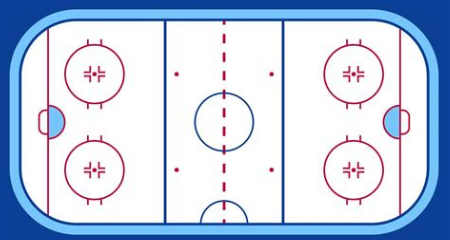
A standard hockey lineup has 12 players on the ice during a faceoff, with six players representing each team. Only six of those players are the Bluejays we’re rooting for, though! A faceoff takes place when two opposing players position themselves at a designated spot, ready to compete for possession of the puck as an official drops it between them. Faceoffs mark the beginning of a game and restart play after certain stoppages. There are nine designated faceoff locations on the rink, and each one gives the teams another opportunity to fight for possession.
Of the six players on each team, five are skaters and one is the goalie. The skaters are divided into forwards and defensemen. Forwards generally focus on attacking the opposing team’s net and creating scoring opportunities, while defensemen work to protect their own net. Each team typically has three forwards and two defensemen. The center, who often takes faceoffs, is one of the three forwards.
One unique aspect of hockey is that players can change while play is still underway. These substitutions, known as changes on the fly, allow players to rotate in and out without waiting for a stoppage. Players often switch in coordinated groups, so start familiarizing yourself with the numbers on the ice and which players tend to skate together!
Although hockey is known for its physical play, not every collision is a penalty. Forechecking and backchecking are strategies players use to pressure opponents and regain possession of the puck. Forechecking involves putting pressure on the opposing team in the offensive zone, while backchecking involves pursuing opponents as they advance toward the defensive zone.
Certain types of illegal contact can result in penalties, requiring a player to spend time in the penalty box while their team plays short-handed. Although some of the hits on the ice might look especially aggressive, the rules determine whether a play is legal or warrants a penalty.
Women’s ice hockey follows different rules regarding body checking. Rather than using heavy body contact to stop an opponent, players use techniques such as body angling to obstruct an opponent’s path and limit their options. This allows them to defend against opposing players while keeping the game moving.
All in all, a hockey game offers approximately two and a half hours of fast-paced action and energizing fun. Despite the chill of the arena, the Bluejays are ready to bring the heat as they take on their upcoming conference opponents.
A special thank you to Daniel, Jodi, Ryan and Sunora for helping make this crash course possible. I hope this guide has not only been insightful but has also motivated readers to come watch our newest Bluejays take the ice on Oct. 30. Come join me in painting the stands blue and yellow!