
100 Days in Eden: Gerald Saladyga’s Rwanda Series
By: Nick Prosterman
On Sept. 24, 2026, the Art Museum hosted the opening reception for 100 Days in Eden: Gerald Saladyga’s Rwanda Series. The exhibition features 34 works created in 2011-12, inviting viewers to reflect on the 1994 Rwandan Genocide, when Hutu government forces and civilians slaughtered more than 800,000 Tutsi and moderate Hutus over the course of 100 days. Through these deeply personal and evocative works, the Connecticut-based artist compels viewers to recognize the human cost of historical tragedy and honors the dignity of those whose lives were forever altered by unimaginable violence.
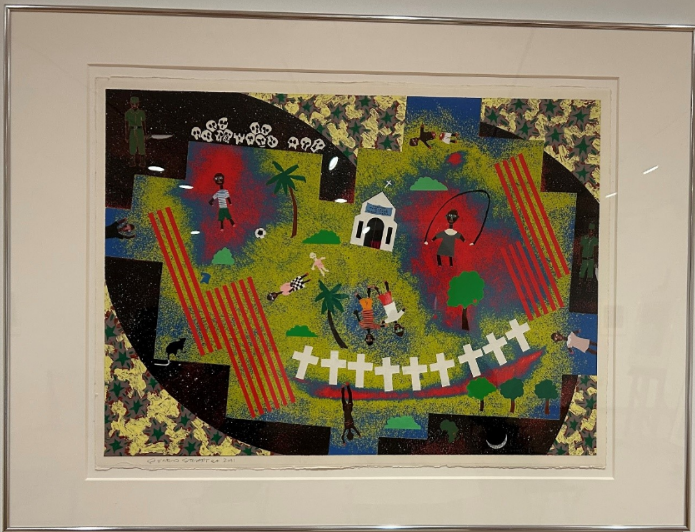
By its name alone, 100 Days in Eden blends Rwanda’s natural beauty and humanity’s basic desires for connection and peace with the horrors of those 100 days. One could even argue that the overarching theme of lost innocence relates to that of Adam and Eve. The depiction of children with severed limbs next to the toys they can no longer play with is a striking and recurring motif that effectively communicates this. One composition that especially stood out to me showed a churchyard full of wounded children trying to play with their toys, surrounded by trees and pools of blood. A cross has fallen from the church’s roof, while several others stand beside an unidentifiable corpse. Along the borders lurk soldiers with hollow faces and machetes, several skulls, and a map of Africa marked by a bloodstain where Rwanda is located. Beneath the indescribable horror depicted here lies the search for a lost paradise. One that is free of the injustice, pain, and death that run rampant in this landscape.
To this day, the 1994 Rwandan Genocide remains one of the most devastating genocides of the 20th century. Saladyga responds to these atrocities with vibrant imagery that juxtaposes the comforts of religion and childhood with the overwhelming presence of despair, violence, and death that defined this period. This harrowing yet compelling contrast serves as a powerful reminder that genocide is more than a statistic. Adults lose their families; children are robbed of their futures, and those who survive carry that immense grief and trauma for the rest of their lives. While this series addresses an extremely sensitive and tragic subject, it offers an opportunity to reflect on the consequences of hatred and the resilience of the human spirit. If you have the opportunity, I highly recommend experiencing this exhibit in person.